Robert Irwin: Atmospheres, Perception, and Seeing
CloseRobert Irwin exists at the limits of perception, dissolving the boundaries between light, space, and time. The Los Angeles-born pioneer of the Light and Space movement does not design objects—he engineers experiences. He manipulates sight itself. And in doing so, he has become one of the most radical architects of atmosphere.
For decades, architecture has been obsessed with form. But Irwin reminds us: it’s not the object that matters—it’s the way we perceive it. In an era where architecture is increasingly a digital exercise, screen based parametric complexity, Irwin’s practice is a sharp counterpoint. His work demands presence. It requires the body. The eye. The movement of light over time. His environments are not seen, they are felt.
SEEING IS NOT PASSIVE
Irwin’s early work in the 1960s was rooted in minimalism, but unlike his New York contemporaries—Donald Judd, Dan Flavin, and Frank Stella—he wasn’t interested in objects. He was interested in conditions. By removing the “thingness” of art, he forced the viewer into a heightened awareness of space itself.
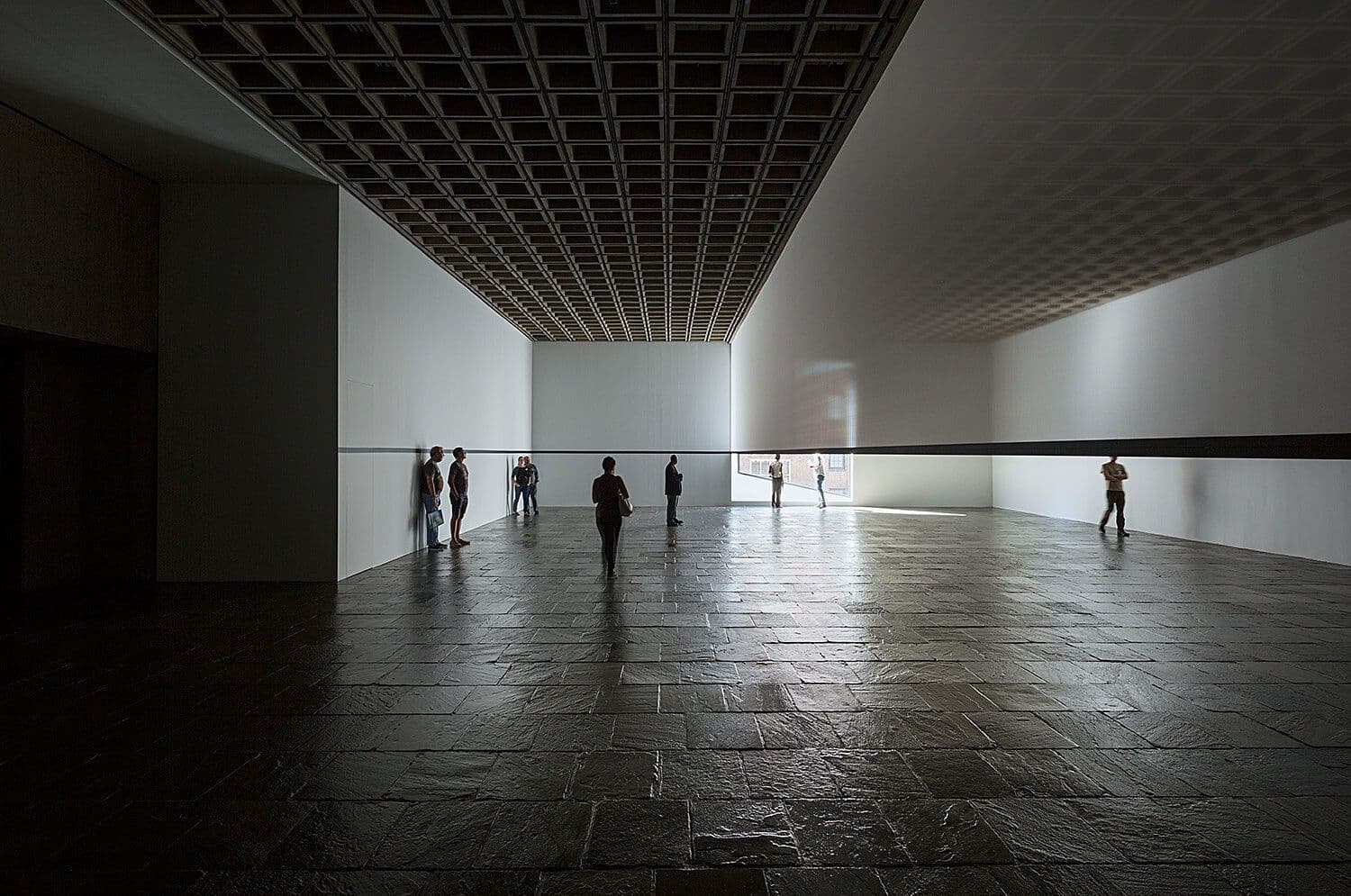
Consider Scrim Veil—Black Rectangle—Natural Light (1977), a legendary intervention at the Whitney Museum. A near-invisible scrim cut the gallery in half, refracting and diffusing the daylight that flooded through the window. There was no painting, no sculpture—just the bare architecture, transformed into an atmosphere of perception. Irwin was turning the institution inside out, showing that architecture is not a static shell, but an ever-changing optical field.
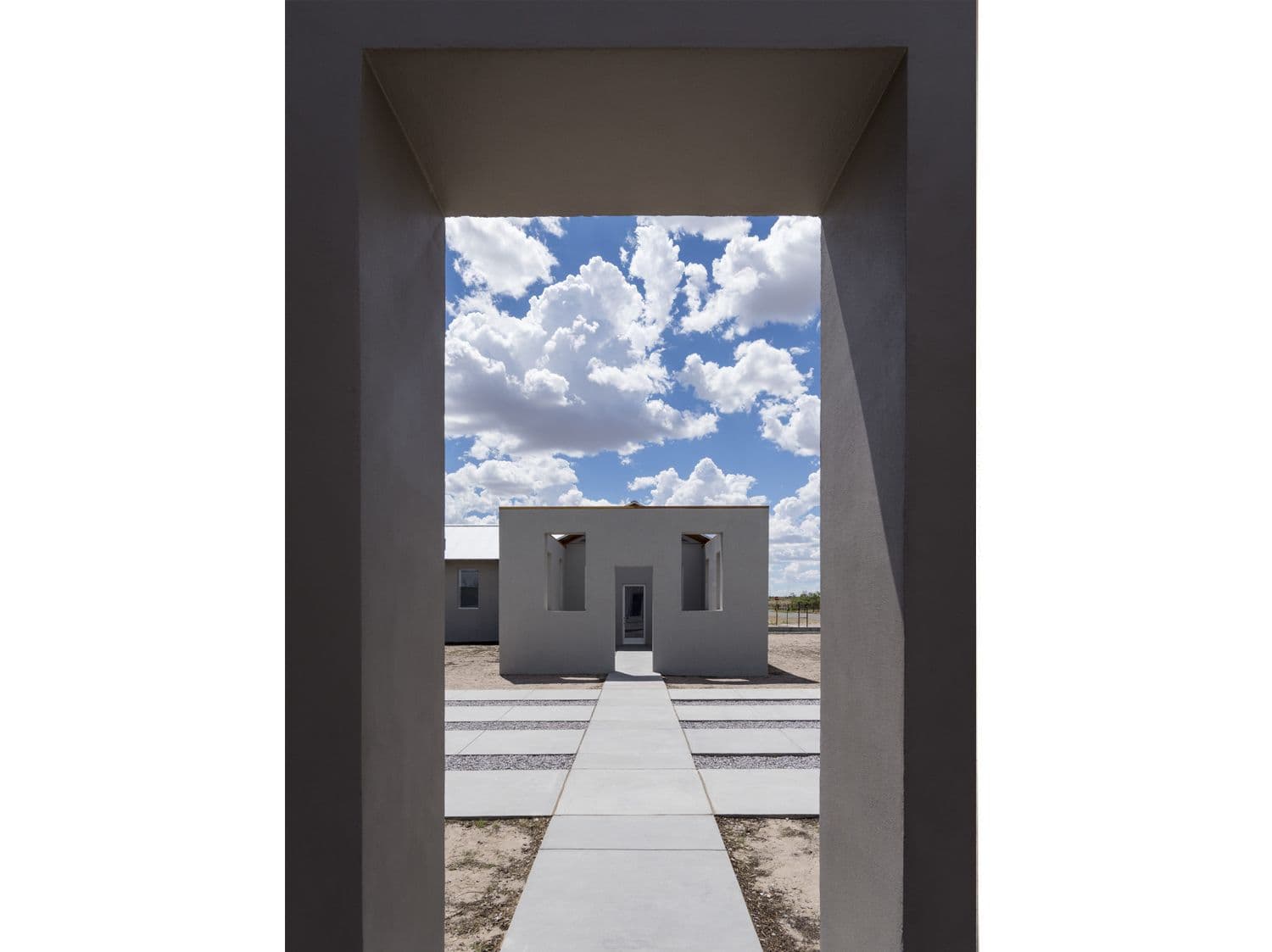
Or take Marfa Project (2016), a work embedded in the landscape. Here, Irwin constructed an entirely new building—a structure defined not by function but by sensation. A matrix of translucent walls and shifting light, it behaves like a mirage, dissolving and reappearing as the sun moves across the sky. It is architecture as a time-based medium, where space is not a fixed reality but an evolving condition.
ARCHITECTURE AS A FIELD OF PERCEPTION
This is where Irwin becomes critical to architectural discourse. He dismantles the arrogance of form, reminding us that buildings are not merely objects in space—they are fields of experience.
Juhani Pallasmaa, in The Eyes of the Skin, argued that architecture should not be visual but atmospheric, engaging all the senses. Irwin prefigured this. His work demands that we ask: How does space feel? How does it shift? How does it respond to time? In this, he anticipates the concerns of contemporary architects like Peter Zumthor, whose buildings—whether the Therme Vals or Bruder Klaus Chapel—operate like sensory chambers, tuning the body to temperature, texture, and light.
And in a time of climate crisis, when architects must rethink materiality and energy, Irwin offers a radical alternative: architecture not as construction, but as calibration. What if design was not about making but about tuning? Not about adding but about revealing?
THE ATMOSPHERE IS THE ARCHITECTURE
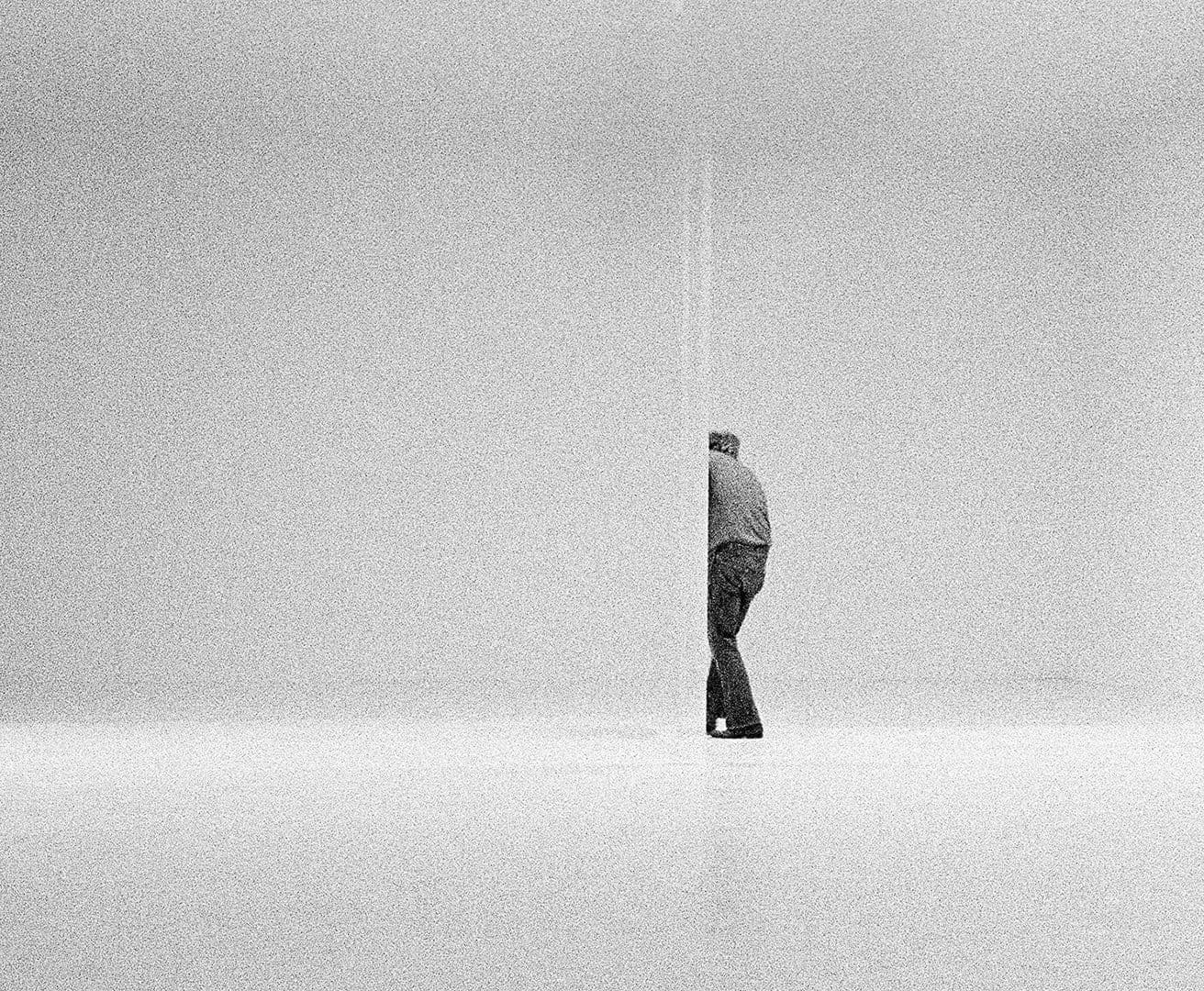
Robert Irwin once said, "Seeing is forgetting the name of the thing one sees." This is a manifesto for architecture in the 21st century. It’s not about form—it’s about presence. It’s about cultivating an awareness of the conditions that already exist.
Imagine a world where buildings do not impose themselves but simply unfold. Imagine a museum that dissolves into the light, a house that reshapes itself with the shifting sun, a city that is felt rather than seen.
Robert Irwin never built a skyscraper, never drafted a masterplan. Yet, his work is more radical than most contemporary architecture. Because he understood what so many forget: space is not a thing. It’s an experience. And perception is the architecture.