Housing as Cultural Infrastructure
CloseThe Missing Middle
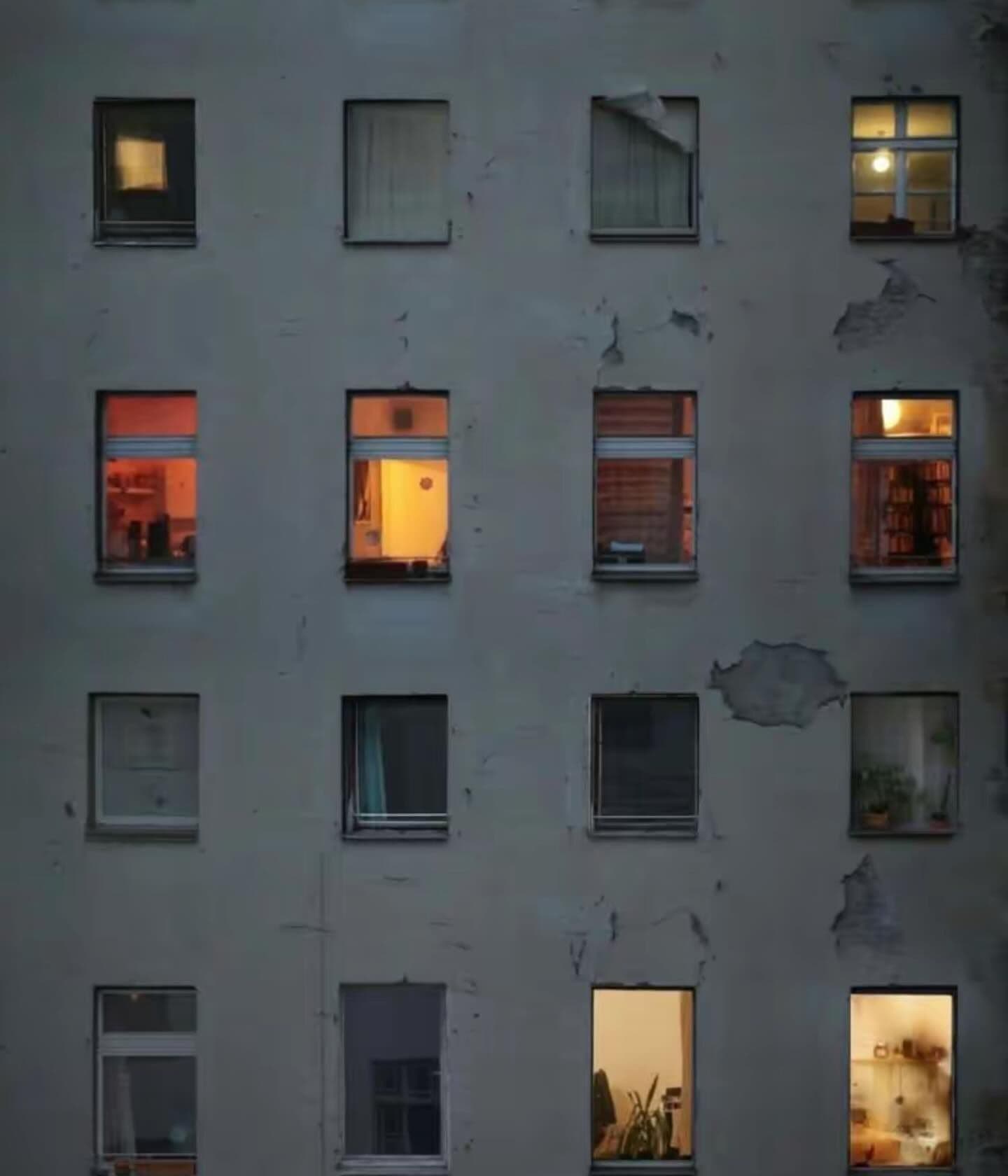
On my street an apartment block stands like a pre-cast monument to failure. Thirty more or less identical units with small windows staring blankly at the street below. Across the city, suburban sprawl spreads endlessly, each house a fortress of privacy that requires a car to reach even the nearest coffee shop. Between these extremes lies a relative void, both physical and conceptual, a missing middle that could save our cities.
This is not another argument for density. Density is inevitable, global urbanisation ensures that. This is an argument for intelligence. For understanding that the future of cities depends not on how many people we can pack into a square kilometre, but on how thoughtfully we can design for the radical diversity of human experience.
Average
Current housing provision operates on a fundamental fallacy: that diverse communities can be served by uniform housing solutions. Planning departments speak in averages, average household size, average income, average space requirements as if families, seniors, artists, immigrants, and indigenous communities all inhabit space in identical ways. The result is housing that serves no one particularly well while failing entire segments of the population entirely.
Walk through some Australian cities recent apartment developments and witness this failure in real time. Standardised requirements for floor plans repeated across hundreds of units, designed to prescribed standards for what people apparently need to live. Meanwhile, multigenerational families crowd into spaces designed for nuclear units, artists struggle to find live/work arrangements, and aging residents face mobility barriers designed into their environments.
The missing middle offers an escape from this planning driven typological monotony. Between the detached house and the high rise lies a spectrum of housing forms terraces, courtyard houses, small apartment buildings, cohousing clusters each capable of serving different ways of living while contributing to neighbourhood scale density. The key insight is precision: matching specific building types to specific community needs rather than imposing one size fits all solutions.
Cultural Architecture
Housing should be thought of as cultural infrastructure. How we organise domestic space reflects and shapes social relationships, economic patterns, and cultural practices. Indigenous communities have long understood that traditional housing forms encode kinship systems, seasonal cycles, and relationships to landscape through their architecture. Māori papakāinga developments in Auckland demonstrate how housing clusters can support extended family networks while maintaining individual household privacy, achieving density through social connection rather than spatial compression.
This cultural dimension explains why diverse communities require diverse housing forms. Recent immigrants often prioritise extended family proximity and communal gathering spaces over individual privacy. Ageing communities need accessible design but also social connection systems that prevent isolation. Young professionals might value flexibility and proximity to cultural amenities over private outdoor space. Each of these patterns requires different architectural responses and cities that provide only one housing type inevitably exclude entire communities.
The sophistication lies in overlaying these diverse needs within single developments. Copenhagen's cohousing projects achieve this through different unit types for different life stages, connected by shared facilities that enable ageing in place while supporting young families. We have access to digital modelling tools that now allow capable architects to optimise apartment arrangements, ensuring equitable access to daylight, privacy, and community connection across diverse household types.
Environmental Intelligence
Climate change demands that we abandon inefficient housing patterns, but this doesn't mean abandoning variety. Different building forms excel in different environmental conditions, and cities can achieve better environmental performance through typological diversity. Terraces optimise for cross-ventilation in temperate climates, courtyard houses create cooling microclimates in hot conditions, and narrow-frontage buildings maximise solar access on challenging sites.
Freiburg's Vauban district demonstrates this principle at neighborhood scale. Rather than imposing a single sustainable building type, the development deploys different forms where they perform best environmentally. Three-storey terraces with steep roofs maximise solar panel area while providing family-friendly ground access. Four-storey apartment blocks optimise shared wall efficiency while maintaining human scale. The result is net-positive energy performance achieved through architectural intelligence rather than technological brute force.
This environmental dimension of typological diversity extends beyond energy performance to water management, biodiversity, and urban heat reduction. Stockholm's Hammarby Sjöstad integrates diverse housing types with blue-green infrastructure, using computational modeling to improve stormwater flows across the development. Private courtyards provide infiltration opportunities while apartment building rooftops support extensive green systems. The environmental performance emerges from the interaction between building diversity and landscape systems.
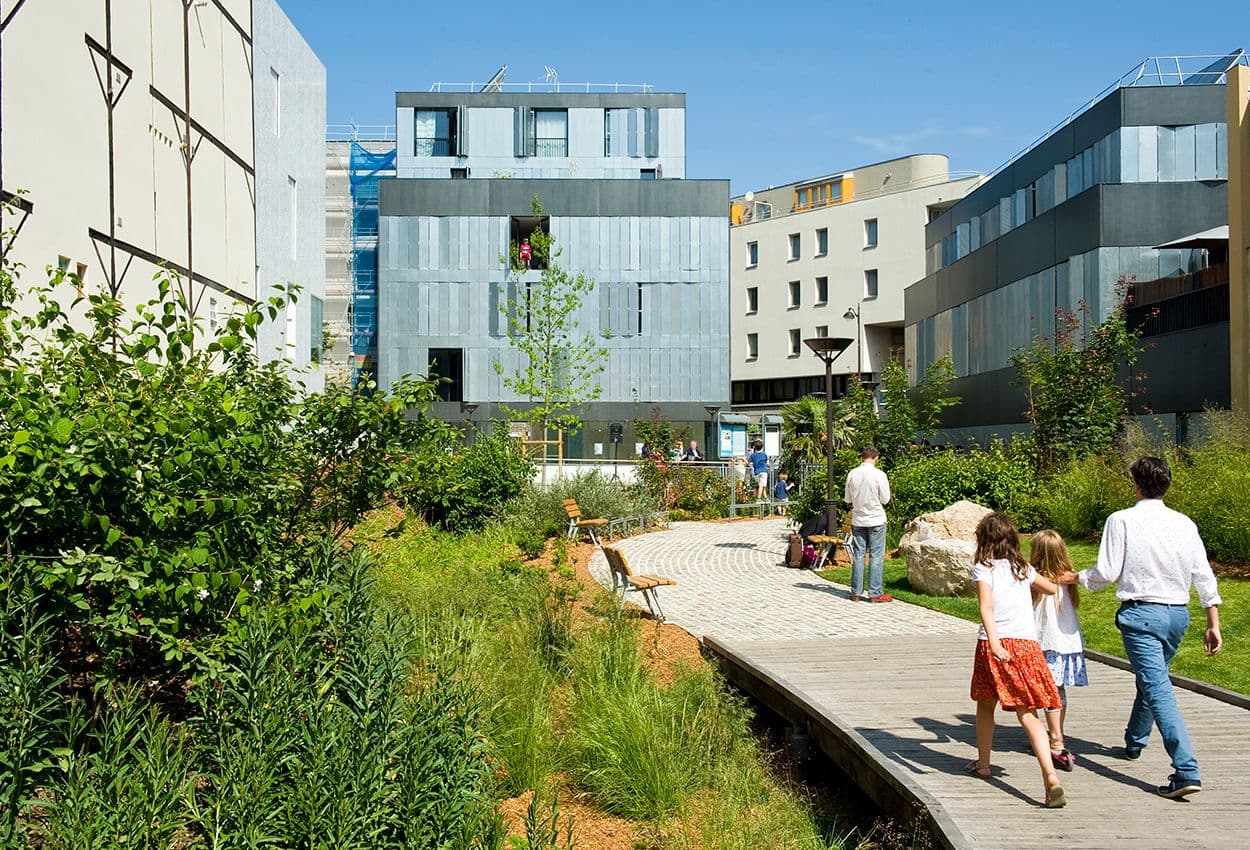
Housing diversity is not about who gets to live where, and under what conditions. Current planning systems often institutionalise exclusion through zoning that segregates different income levels and family types through planning restrictions that prevent typological innovation.
Progressive missing middle developments challenge this segregation by integrating affordable housing throughout diverse building typologies. The Drive development in Sydney includes 30% affordable housing distributed across terraces, townhouses, and apartments. This integration ensures that affordable housing residents have the same access to private outdoor space, community facilities, and neighborhood amenity as market-rate residents.
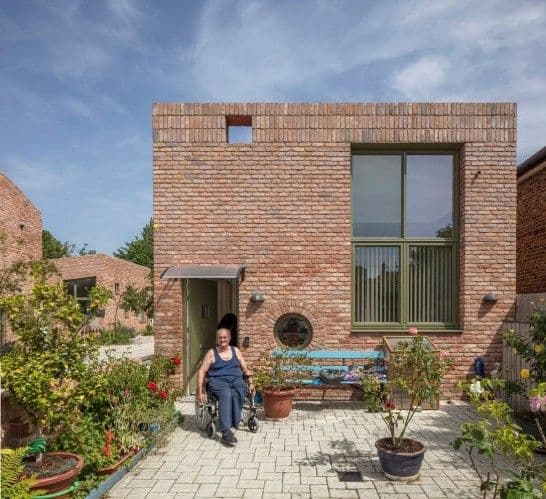
The spatial politics extend to generational equity. Many cities face an aging crisis not because they lack housing, but because existing housing fails to support aging-in-place. Seniors often live in large suburban houses that become difficult to maintain, while lacking access to smaller dwellings in the same neighborhoods. Missing middle typologies can provide downsizing options that maintain community connection like garden apartments near family homes, accessible units within walking distance of established social networks.
Digital Precision
Contemporary computational tools enable unprecedented precision in matching housing forms to community needs. Building performance analysis can now model not just energy efficiency but social outcomes and how building layouts affect neighborly interaction, how circulation systems support aging residents, how unit diversity enables economic integration. These tools transform housing design from an aesthetic exercise into a social technology.
The precision extends to site-specific optimization. Rather than applying standardized designs, computational analysis can determine which building types work best on specific sites. Solar access modeling ensures equitable daylight distribution across different housing forms. Wind flow analysis prevents privacy conflicts between lower and higher density typologies. Urban heat island modeling informs material selection and landscape integration strategies.
This technological sophistication ultimately serves humanistic goals by creating environments that support the full spectrum of human flourishing. The tools enable architects to design with empathy at scale, understanding how spatial decisions affect daily life for different household types. A mother navigating a stroller needs different circulation systems than a senior using a walking frame. An artist working from home requires different acoustic conditions than a shift worker sleeping during the day. Computational analysis can now optimize for these diverse needs simultaneously.
Typological Justice
The path forward requires reconceptualising planning as cultural and environmental stewardship rather than market facilitation. This means moving beyond density calculations to evaluate developments based on their capacity to serve diverse communities equitably. Planning frameworks should establish performance targets, environmental standards, or affordability requirements. Cultural responsiveness can be achieved through diverse typological responses rather than prescriptive zoning.
Implementation requires new forms of community engagement that center marginalized voices in design processes. Too often, "community consultation" means seeking approval from existing residents who benefit from exclusionary zoning. Genuine cultural responsiveness requires understanding how different communities use space, what forms of privacy and publicity they value, and how their domestic practices intersect with environmental sustainability.
The design professions must develop new expertise in cultural spatial analysis alongside technical environmental analysis. This means working with community organisations, cultural groups, and advocacy organisations to understand how housing forms can better serve diverse needs. It means recognising that architectural decisions have cultural consequences, and that inclusive design requires inclusive design processes.
Binary
The missing middle represents more than a housing typology; it's a methodology for addressing urban complexity without resorting to simplistic solutions. Rather than choosing between density and liveability, between affordability and sustainability, between privacy and community, successful developments achieve multiple goals through careful calibration of spatial and building forms.
This calibration requires abandoning the modernist fantasy of optimal solutions in favor of what might be called "situated optimism" understanding that the best urban environments emerge from responding intelligently to specific conditions rather than imposing universal principles. Every site has different solar conditions, different cultural contexts, and different environmental challenges. The missing middle succeeds by embracing this specificity rather than trying to overcome it.
It is still international examples that prove that this approach works. From Melbourne's St Albans Housing by NMBW to Copenhagen's cohousing developments, from Auckland's papakāinga to Stockholm's eco-districts, cities worldwide are discovering that housing diversity and community diversity reinforce each other. When we design for the full spectrum of human needs, we create places where everyone can thrive.
The urgent task for cities facing housing crises is not to build more of the same, but to build differently. This means supporting typological innovation, investing in cultural responsiveness, and using sophisticated design tools to allow for multiple outcomes simultaneously. Re thinking the missing middle offers a way forward for the future of cities. It means understanding that in an age of climate and cultural crisis, architectural intelligence is not about providing more of the same but rather designing more of what we need.