Australia's largest waste stream. The reuse of Demolished Concrete
CloseAustralia faces a dual challenge in its construction industry: managing enormous quantities of concrete waste while simultaneously addressing a critical housing shortage. The construction and demolition sector accounts for approximately 33% of all waste by weight globally, with concrete representing the most significant component after excavated soils. In Australia, this translates to millions of tonnes of concrete waste annually, most of which is either landfilled or downcycled through energy-intensive crushing processes. Simultaneously, the nation grapples with housing affordability and supply issues, creating an urgent need for innovative, sustainable construction solutions.
Recent research developments present a compelling opportunity to address both challenges through the strategic reuse of demolished concrete for precast wall panels in housing construction. This approach represents a paradigm shift from traditional waste management practices toward a circular economy model that transforms waste streams into valuable building materials while significantly reducing environmental impact.
The Current State of Concrete Waste in Australia
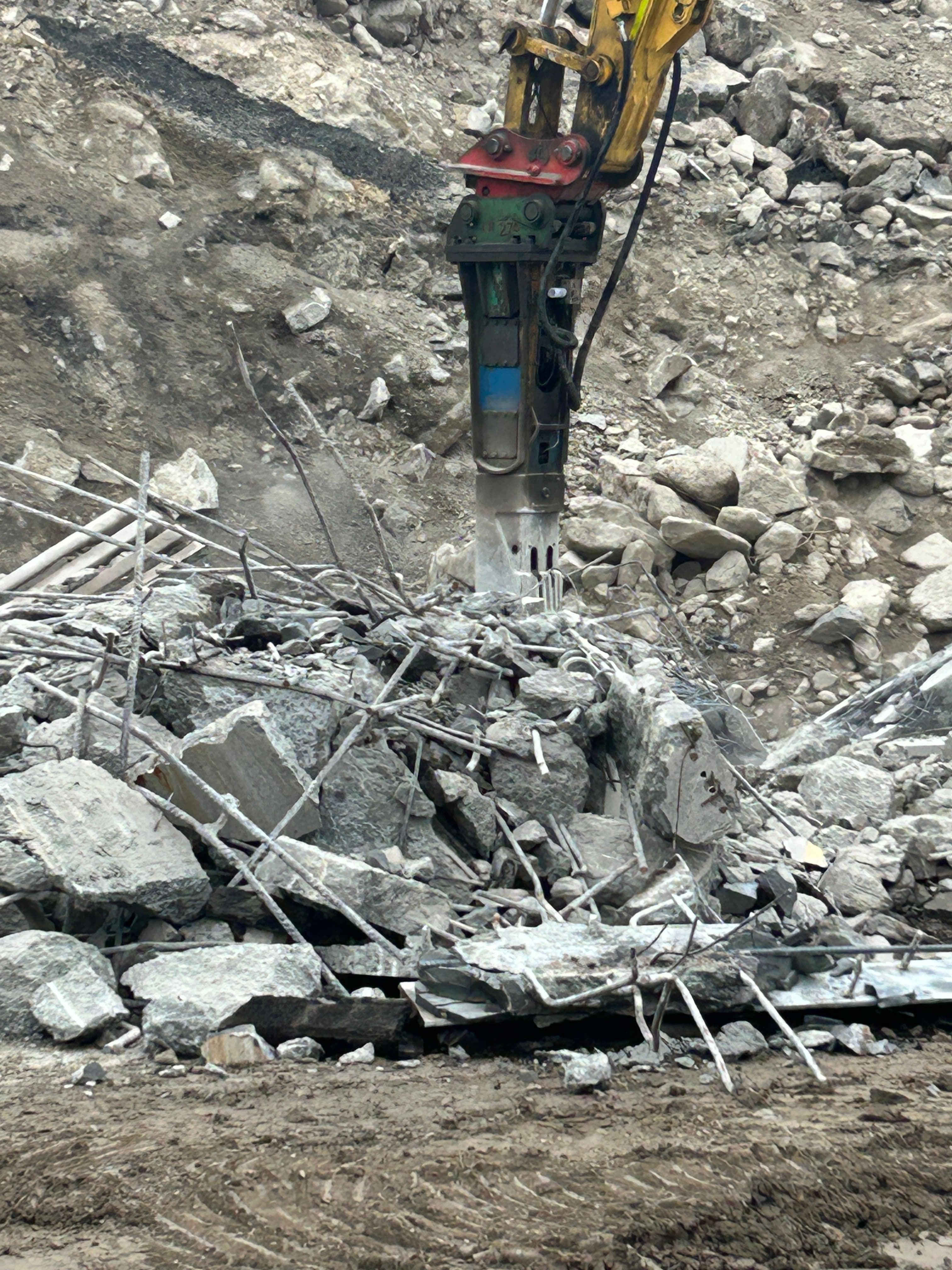
Concrete demolition in Australia typically follows established global practices, utilising hydraulic excavators equipped with crushers, pneumatic jackhammers, and diamond wire saws. The resulting concrete rubble, characterised by irregular geometries and two recognisable parallel flat sides, is predominantly processed through energy-intensive crushing operations. This downcycling approach requires substantial fossil fuel consumption, with crushers consuming approximately 50 litres of fuel per hour and hydraulic jaws requiring an additional 25 litres per hour.
The environmental implications are substantial. Cement production alone accounts for 8-9% of global greenhouse gas emissions, making concrete the most carbon-intensive widely used material. When demolished concrete is downcycled into aggregates for new concrete production, the environmental benefits are minimal since virgin cement is still required. This linear approach fails to capitalise on the embodied energy already invested in the original concrete structures.
Furthermore, Australia's geographical challenges, including vast distances between urban centres and limited recycling infrastructure in remote areas, often make concrete crushing economically unviable. This results in significant quantities of concrete waste being transported to landfills, representing both an environmental burden and a lost opportunity for material recovery.
Innovative Approaches to Concrete Reuse
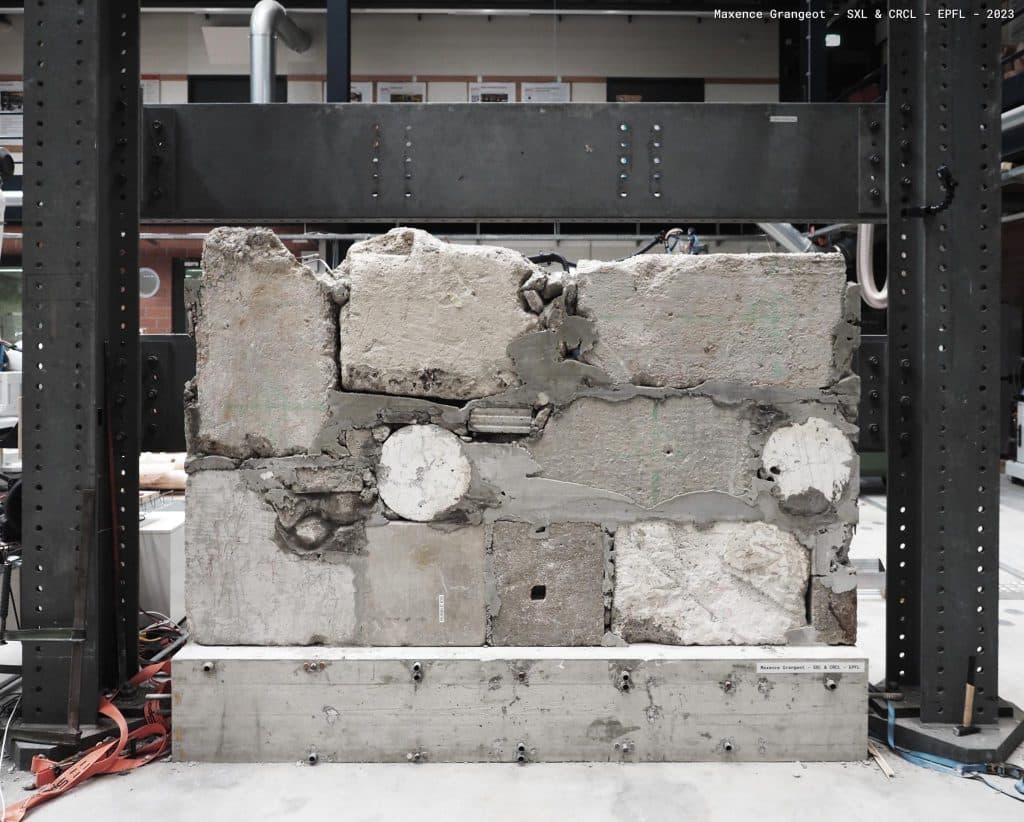
Recent research has identified promising methods for transforming demolished concrete rubble into standardised building components suitable for housing construction. The most significant breakthrough involves the development of "Reused Rubble Concrete Masonry Units" (RR-CMU), created through sophisticated digital matching processes that optimise irregular concrete pieces into functional precast wall panels.
This innovative approach begins with comprehensive digital scanning of concrete rubble using structured light scanners and photogrammetry techniques. Each piece is characterised according to its geometric properties, creating detailed three-dimensional models that capture surface irregularities, dimensions, and structural characteristics. Machine learning algorithms then analyse these digital models to identify optimal matching opportunities between different pieces.
The matching process utilises fixed-length vector analysis, where each concrete surface is converted into standardised numerical representations that can be computationally compared. Advanced neural networks, trained on extensive datasets of concrete rubble characteristics, create dimensional embeddings that group similar surface types and identify optimal pairing opportunities. This process considers multiple optimisation parameters, including surface compatibility, structural stability, and the minimisation of new concrete required to complete the precast units.
Technical Process and Manufacturing
The transformation of demolished concrete into precast wall panels follows a systematic factory-based process designed to ensure quality control and structural integrity. Initially, concrete rubble is collected from demolition sites and transported to specialised processing facilities where it undergoes geometric characterisation through high-resolution scanning.
Advantages of Off-Site Sorting and Processing
The off-site sorting and processing of concrete rubble offers significant advantages over traditional on-site handling methods. Centralised processing facilities can accommodate sophisticated scanning equipment, including structured light scanners and LiDAR systems, which would be impractical to deploy at individual demolition sites. This controlled environment enables consistent data capture quality regardless of weather conditions or site constraints that often plague construction projects.
Off-site sorting also allows for the accumulation of larger inventories of concrete rubble, creating better opportunities for optimal matching. Rather than being limited to materials from a single demolition project, processing facilities can draw from multiple sources to achieve superior geometric compatibility and structural performance. This aggregation effect is particularly valuable in Australia's dispersed urban centres, where individual demolition projects may not generate sufficient quantities of suitable rubble for efficient matching.
The centralised approach enables specialised workforce development, with operators becoming expert in concrete characterisation, digital scanning techniques, and quality assessment procedures. This expertise concentration improves processing efficiency and ensures consistent output quality, contrasting with the variable skill levels and time pressures typically encountered on demolition sites.
Furthermore, off-site processing facilities can implement comprehensive safety protocols and environmental controls that would be difficult to achieve in temporary on-site operations. This includes dust management systems, noise control measures, and proper handling of potentially hazardous materials that may be embedded within demolished concrete.
Benefits of Off-Site Precast Panel Fabrication
The factory-based fabrication of precast wall panels from sorted concrete rubble delivers substantial benefits across multiple dimensions. Most significantly, the controlled manufacturing environment enables precision assembly techniques that would be impossible to achieve in field conditions. Heavy lifting equipment, including overhead cranes and specialised positioning systems, can be permanently installed to handle large concrete pieces safely and accurately.
Quality control becomes systematic and repeatable in factory conditions. Each panel undergoes standardised testing procedures, including compressive strength verification, dimensional accuracy checks, and visual inspection protocols. Temperature and humidity control during curing processes ensures optimal material performance, while protection from weather elements eliminates the variability and delays common in on-site concrete work.
The factory environment also enables sophisticated connection strategies that enhance panel performance. Post-tensioning systems can be installed with precision, mechanical connections can be fabricated to exact specifications, and surface finishing can be completed to architectural standards. These refinements are particularly valuable for housing applications where aesthetic quality and dimensional accuracy directly impact construction schedules and costs.
Production scheduling benefits significantly from off-site fabrication. Panels can be manufactured in advance of construction schedules, reducing critical path dependencies and enabling just-in-time delivery to construction sites. This approach is especially advantageous in Australia's climate, where seasonal weather patterns can significantly impact construction productivity.
The scanning process captures detailed surface information, including texture, dimensions, and potential reinforcement characteristics. This data feeds into computational systems that perform sub-surface extraction, analysing multiple orientations and identifying candidate surfaces for matching. The minimum size requirements ensure that matching occurs on substantial proportions of each piece, typically requiring at least 20% surface engagement for structural viability.
Once optimal matches are identified, the concrete pieces are assembled using various connection strategies. These include dry-fit arrangements that rely purely on geometric compatibility, mechanical connections using dowels or fasteners, and mortar joints that fill small gaps while maintaining structural integrity. For enhanced performance, post-tensioning systems can be incorporated to create highly stable wall panel units.
The factory environment enables precise quality control measures, including structural testing, geometric verification, and surface finishing. Each completed wall panel undergoes inspection to ensure it meets Australian building standards for residential construction, including load-bearing capacity, dimensional accuracy, and durability requirements.
Applications in Australian Housing
Precast wall panels manufactured from demolished concrete offer numerous applications in Australian housing construction. The primary structural applications include load-bearing walls for single-storey residential buildings, retaining walls for sloped sites common in Australian terrain, and foundation systems that capitalise on the excellent compressive properties of concrete.
The panels are particularly well-suited for compression-based structural systems, including wall assemblies, vault structures, and foundation elements. The presence of existing reinforcement within the demolished concrete pieces can provide additional tensile and flexural capacity, though the irregular nature of this reinforcement requires careful structural analysis and conservative design approaches.
In the Australian context, these panels offer specific advantages for addressing housing challenges. The standardised manufacturing process enables consistent quality while reducing construction time on-site. The local sourcing of demolished concrete reduces transportation costs and environmental impact, particularly beneficial in Australia's dispersed urban centres. Additionally, the reduced reliance on virgin concrete materials helps address supply chain vulnerabilities that have affected the Australian construction industry.
Environmental Benefits and Carbon Reduction
The environmental advantages of reusing demolished concrete for precast wall panels are substantial and measurable. Life cycle assessments demonstrate that RR-CMU wall systems can achieve approximately 90% reduction in embodied carbon compared to conventional concrete construction. This dramatic improvement stems primarily from eliminating the need for virgin cement production, which represents the most carbon-intensive component of traditional concrete.
When demolished concrete is treated as a waste material with zero assigned emissions, the environmental benefits become even more pronounced. The only carbon costs associated with the reuse process include transportation to processing facilities, energy consumption during scanning and matching operations, and the production of small quantities of new concrete required to complete the wall panels.
For a typical 30-square-metre wall application, analysis shows that reused concrete wall panels generate approximately 140 kg CO2 equivalent compared to nearly 2,000 kg CO2 equivalent for conventional concrete construction. This represents a transformative improvement in the environmental performance of residential construction.
Beyond carbon reduction, the process offers additional environmental benefits including reduced landfill pressure, decreased demand for virgin aggregates, and minimised landscape disruption from quarrying operations. In Australia's context, where environmental protection is increasingly prioritised, these benefits align with national sustainability goals and building certification requirements.
Economic Viability and Market Adoption
The economic case for demolished concrete reuse in precast wall panel production is increasingly compelling. Concrete rubble is often available at negative cost, as demolition contractors typically pay disposal fees to waste management facilities. This creates an immediate economic advantage for processing facilities that can transform this waste stream into valuable building products.
The factory-based production model enables economies of scale while maintaining quality control standards expected in the Australian construction market. Digital technologies, while requiring initial capital investment, significantly reduce labour costs associated with manual sorting and matching processes. The standardised output products integrate seamlessly with existing construction practices, minimising adoption barriers for builders and developers.
Market analysis suggests particular opportunities in Australia's social housing sector, where cost efficiency and environmental performance are increasingly prioritised. Government initiatives promoting circular economy practices and sustainable construction methods